
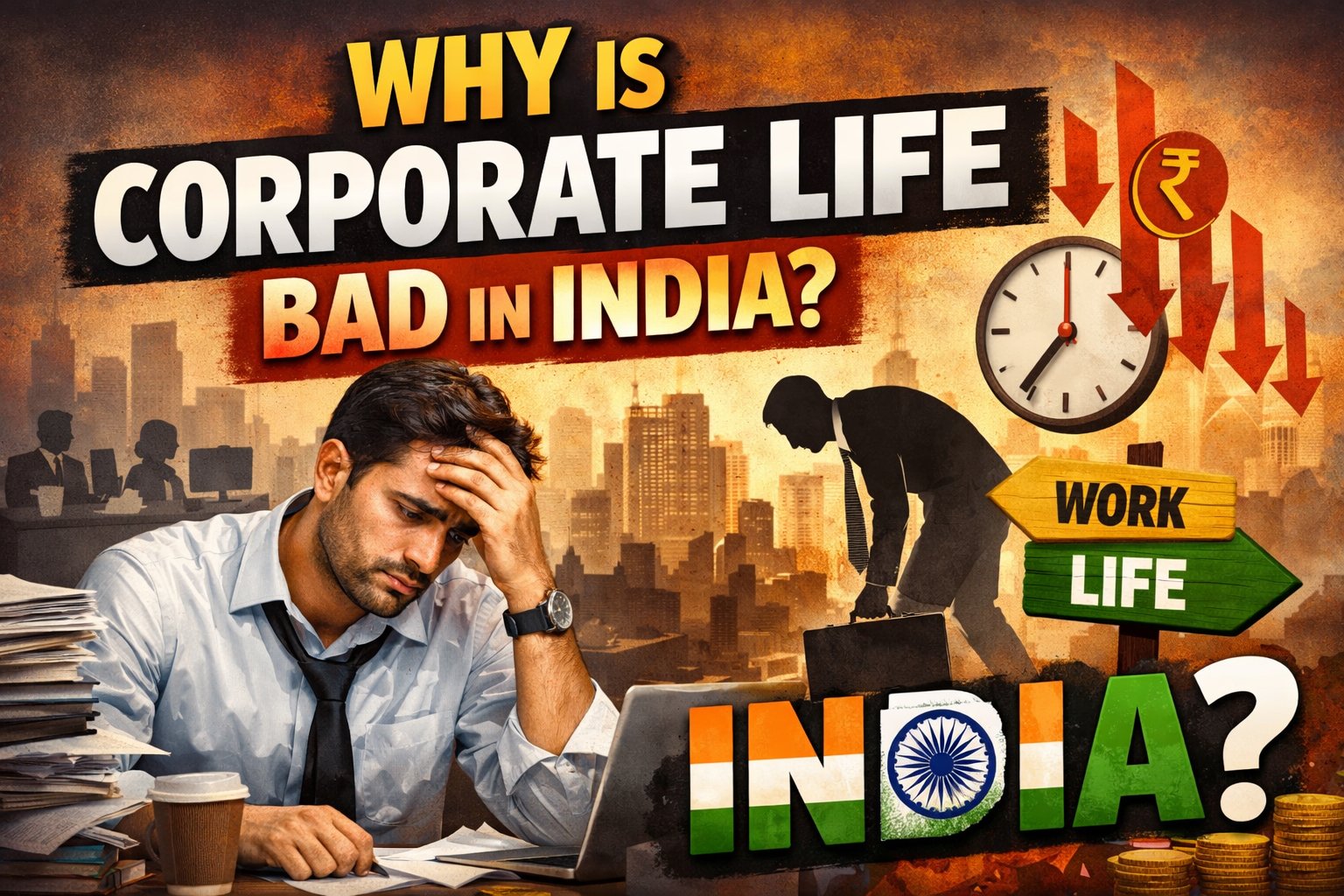
India’s corporate story is full of paradoxes. The country is a global services powerhouse, yet many employees report burnout, long hours, and an “always‑on” culture that strains mental health and family life. Multiple surveys in 2024–25 show poor work‑life balance and rising distress, especially in BPO/contact centers and IT/ITeS.
This article explores why corporate life often feels unhealthy in India, what’s unique about BPO and IT, how other sectors (banking/finance, consulting, startups) mirror similar patterns, and practical steps to rebuild professionalism and human‑centered workplaces.
The Big Picture: Burnout and Work‑Life Imbalance
Recent data suggest over half of Indian employees face burnout, primarily due to poor work‑life balance. A March 2025 multi‑state survey (Vertex Group) found 52% of respondents reported burnout, with 23% working beyond regular hours, often spilling into weekends.
Independent reporting echoes this trend. BW Wellbeing World, citing a 2024 CII–MediBuddy study, notes 62% of Indian employees experience burnout, far above global averages, and ties it to long hours, high pressure, and lack of boundaries.
Clinical perspectives point to critical levels of workplace stress: doctors at Amrita Hospital highlight the health impact of excessive workload, unsocial hours, and toxic environments, linking them to hypertension, cardiac risks, anxiety, and depression.
Why BPO & Contact Centers Hurt the Most
1) High Attrition, Shift Work, and Emotional Labor
Industry attrition in BPO/contact centers consistently ranks among the highest worldwide. A 2024 industry report shows BPO attrition in APAC ranging 25–38%, and contact centers 30–45%, driven by low pay, stressful environments, and limited growth.
Night shifts, target pressure, and handling distressed customers amplify emotional exhaustion, a hallmark of burnout. Multiple academic reviews on BPO in India connect irregular hours and high attrition to sustained stress and disengagement.
Confidential Review (BPO agent, anonymized):
“My schedule flips between day and night every few weeks. I meet my KPIs, but I sleep poorly and barely see my family. When the queue spikes, we skip breaks. It feels like we’re numbers, not humans.”
2) Work‑Life Boundaries Are Thin
Surveys repeatedly indicate work extending beyond official hours in BPO/ITeS. The Vertex study found weekend work is common, undermining recovery time and productivity.
IT/ITeS: The “Always‑On” Culture
1) Long Hours, Return‑to‑Office, and Hybrid Fatigue
The tech sector’s project cycles, multi‑timezone clients, and deadline culture often mean extended hours. Even as hybrid remains prevalent, time in office has increased ~1.2× post‑pandemic, driven by collaboration and culture goals, yet this can inadvertently lengthen the workday.
Several 2024–25 surveys note poor work‑life balance and burnout among IT employees, with a large share exceeding the legal 48‑hour week. India Today summarized multiple studies: 72% of verified IT professionals working >48 hours, 83% reporting burnout, and 68% feeling compelled to respond after hours.
Real‑life voice (software engineer, anonymized):
“The sprint never ends. Client calls at odd hours, build failures over weekends, no matter what policy says, the expectation is availability. I worry about saying ‘no’.” (Composite quote matching trends in the cited surveys.)
2) Attrition Has Eased – But Not the Stress
Macro headwinds led to lower attrition in 2024 (IT down to 15.1%, ITeS to 10.8%), but that doesn’t mean environments improved; it may reflect subdued hiring and caution among employees.
Banking/Finance, Consulting & Startups: Similar Pressures
Outside tech and BPO, banks and sales‑driven roles often demand aggressive target achievement, unpaid overtime and weekend work, sparking public protests about long hours and stress.
Consulting and high‑growth startups can combine intense travel, late nights, and ambiguous boundaries, creating a badge‑of‑honor overwork ethos that erodes mental health. Policy commentary and editorials across 2024–25 highlight the normalization of “organizational stretch” and abusive leadership behaviors, with few effective accountability mechanisms.
WHO–ILO’s global meta‑analysis (widely cited by Indian policy outlets) associates >55‑hour weeks with increased mortality (stroke, ischemic heart disease), underscoring the health stakes of chronic overwork.
Professionalism vs. Toxic Norms: Where Do Companies Fall Short?
1) Boundary Violations & After‑Hours Digital Demands
A large share of Indian professionals report pressure to respond after hours, blurring personal time. Policy discussions around a Right‑to‑Disconnect reflect rising concern about digital burnout.
2) Inconsistent People Practices
Academic and practitioner reviews show organizational culture and leadership style strongly shape engagement and well‑being. When recognition, fair evaluation, and psychological safety are weak, morale and productivity drop.
3) Commuting & Infrastructure Burdens
Unlike many European cities, long commutes and limited public support services add hidden hours and stress to Indian corporate life, amplifying the health impact of demanding jobs. Policy analyses call this out as a structural contributor to burnout.
What Employees Say: Composite Reviews (Anonymized, Sector‑Specific)
BPO (customer support, Tier‑1 city):
“Daily targets leave no time to breathe. We rotate night shifts. HR is supportive in words, but rosters and queues decide reality.” (Aligned with BPO attrition and shift‑stress literature.)
IT product firm (mid‑size):
“Hybrid means two commutes plus late calls. Even with wellness sessions, deadlines win. Burnout is discussed, but workloads don’t change.” (Consistent with hybrid RTO increase and burnout surveys.)
Private bank (sales):
“Targets escalate each quarter; weekends are ‘optional’ only on paper. Attrition is constant.” (Reflects public protests and media coverage on long hours and unpaid overtime.)
These anonymized summaries are representative of patterns documented in sectoral surveys and reportage; they avoid singling out individuals or firms without comprehensive, verifiable context.
Why This Matters: Economic & Human Costs
Poor work‑life balance isn’t just personal as it hurts productivity. Surveys find weekend work and extended hours undermine creativity and output, even while raising risks of attrition and health issues.
The Way Forward: Rebuilding a Human‑Centered Corporate India
For Employers
- Adopt true boundary policies: Respect non‑working hours; limit after‑hours messaging; implement manager training for compliance. (Debates around Right‑to‑Disconnect highlight urgency.) [indiatoday.in]
- Redesign workloads: Capacity‑based planning; realistic targets; buffer teams for peak cycles— especially in BPO and IT.
- Measure well‑being, not just output: Blend engagement, burnout, and pulse metrics with delivery KPIs; follow through with action.
- Flexibility beyond location: Hybrid isn’t just office days, offer flexible hours, micro‑breaks, and rota stability to reduce circadian stress.
For Policymakers
- Clarify working‑hour norms and enforceable rest intervals for services sectors, including IT/ITeS and BPO, within labor codes; strengthen mental‑health protections.
- Commuting & urban services: Invest in transport and childcare supports to reduce hidden burdens that magnify stress.
For Employees
- Boundary setting: Use email signatures and calendar blocks to signal availability; escalate systematically if violations persist.
- Peer support & counseling: Leverage EAPs; build team norms around respectful communication and no‑meeting blocks. Clinical experts emphasize early intervention for stress symptoms.
Are Things Improving?
Attrition fell in 2024 across many sectors due to hiring slowdowns and caution, not necessarily healthier cultures. Still, industry bodies (NASSCOM, Indeed) report renewed attention to employee experience, hybrid fatigue, and the need to rebalance priorities in AI‑driven workplaces. Momentum exists, but change requires consistent enforcement and managerial accountability.
Bottom Line
Corporate India’s success shouldn’t require personal sacrifice. The evidence across BPO, IT, banking, consulting, and startups points to a systemic imbalance, long hours, blurred boundaries, and weak professionalism that erode well‑being and productivity. The solutions are known: honest workload design, enforceable boundaries, leadership accountability, and human‑centric policies. It’s time to make them real.
