
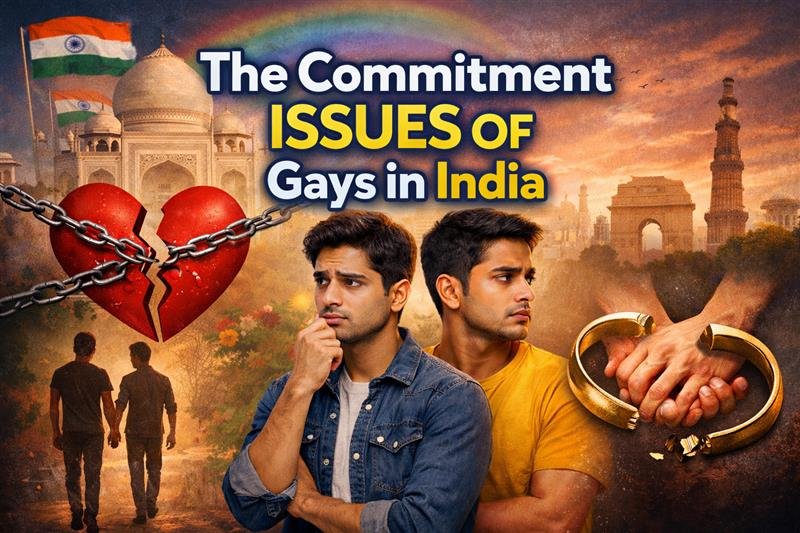
Over the past decade, India’s LGBTQ+ community has witnessed profound shifts: decriminalization of homosexuality in 2018, greater visibility online, and evolving conversations around identity, safety, and family. Alongside these changes, many gay men report that dating feels more transient, with more hookups, fewer sustained relationships, and a perceived reluctance to “make it official.” It is tempting to reduce this to “lost commitment,” but that framing misses context.
Commitment dynamics are changing globally due to technology, mobility, and cultural transitions. In India, these shifts are compounded by unique pressures such as family expectations, social stigma, legal ambiguity around same-sex unions, and the uneven geography of queer acceptance. Rather than moralizing, it is more useful to ask: What structural and cultural forces shape contemporary gay dating in India, and how can individuals cultivate deeper, long-term bonds despite them?
Section 1: The “Hookup Era” – Convenience Meets Caution
1.1 The Dating Apps
Dating apps make it easier to meet people quickly, filter by preferences, and manage emotional risk. Short-term interactions offer low-stakes connection, especially in contexts where visibility can be risky. For many, apps are not just for sex, they are for community, but convenience can incentivize short-term over long-term.
Key takeaway: High choice environments, with many options and low friction, can create a “paradox of choice.” The more options available, the harder it feels to commit because there is always the sense of a “better match” just a swipe away.
1.2 Safety, Anonymity, and Emotional Guardrails
In cities where queer visibility is uneven, anonymity protects users against outing, harassment, or workplace repercussions. Yet the same anonymity can inhibit trust, encourage surface-level interactions, and make ghosting feel like the safest exit, undermining relationship formation.
Key takeaway: When safety is fragile, people often limit vulnerability. Less vulnerability can translate to fewer commitments.
Section 2: Cultural Pressures – When Family and Tradition Collide with Modern Dating
2.1 The Marriage Imperative
The default life script in India still assumes heterosexual marriage with children. Even in supportive families, there is often ambiguity about same-sex relationships. Without a clear social pathway to long-term partnership, such as marriage, relationships can feel provisional, hidden, or short-term by necessity.
Key takeaway: If society does not fully recognize long-term same-sex commitment, individuals may struggle to visualize and pursue it, especially when family support is uncertain.
2.2 Social Stigma and Double Lives
Many gay men navigate dual identities: out with friends, closeted at home or work. Managing secrecy can strain relationships, reduce shared social circles, and limit future planning. The emotional tax of living in the shadows often makes short-term arrangements feel simpler and safer.
Key takeaway: Hidden relationships face more barriers to integration into daily life, making sustained commitments harder to maintain.
Section 3: Legal Realities – Decriminalization Does Not Equal Equality
3.1 The Post-377 Moment
Decriminalization in 2018 removed a major legal obstacle, but it did not automatically deliver societal acceptance or legal recognition of same-sex unions. Without legal frameworks for marriage, joint property, adoption, and spousal benefits, long-term planning can seem precarious.
Key takeaway: Legal recognition matters. It provides structure, rights, and social validation that reinforce commitment.
3.2 Practical Frictions Without Legal Status
From hospital visitation to housing and finance, couples lack standardized protections. This uncertainty nudges some towards shorter commitments where fewer entanglements mean fewer risks.
Key takeaway: When logistics are harder, emotional commitments face extra practical hurdles.
Section 4: Urban Migration and the Geography of Queer Life
4.1 City Hopping and Career Mobility
Ambitious careers often mean moving between cities or countries. Long-distance relationships demand high trust and communication skills, which are hard to cultivate in dating cultures built on speed and discretion.
Key takeaway: Transience makes roots harder to grow. People delay commitment while exploring opportunities.
4.2 Uneven Access to Queer-Friendly Spaces
Queer-friendly venues are concentrated in metros. Outside these hubs, resources and community networks are thinner. That discourages visibility and deepening relationships and makes digital spaces the primary dating sphere, where ephemeral interactions dominate.
Key takeaway: Physical community spaces nourish long-term bonds. Their scarcity affects commitment trajectories.
Section 5: Mental Health, Burnout, and the Desire for “Temporary Peace”
5.1 Coping With Minority Stress
Navigating identity, stigma, and expectations can lead to anxiety, depression, or burnout. Hookups sometimes function as respite, offering connection without the emotional labor of relationship maintenance.
Key takeaway: Short-term intimacy can be a coping mechanism, not a character flaw.
5.2 Emotional Skill Gaps
When emotional literacy and secure attachment styles are not widely supported by families, schools, or workplaces, many struggle with vulnerability, boundaries, and conflict resolution. This makes dating cycles shorter and more volatile.
Key takeaway: Relationship skills are learned. Without them, commitment feels risky or exhausting.
Section 6: The Commitment Question – Is It Really “Lost,” or Just Evolving?
Framing the moment as “lost commitment” oversimplifies. Many gay men in India do want long-term relationships, but the path is obstructed by structural and psychological barriers. What looks like avoidance can be adaptation, optimizing for safety, flexibility, or career goals in a landscape that does not fully support queer permanence.
A more precise view:
- Intent: Desire for commitment exists but competes with survival and opportunity.
- Infrastructure: Legal and social supports are partial, slowing long-term formation.
- Technology: High-choice environments reward short-term strategies.
- Skills and Health: Emotional readiness and mental health support vary widely.
Section 7: Practical Strategies to Cultivate Commitment
For Individuals
- Clarify relationship intent early. Use clear language on profiles and in conversations.
- Filter by values, not just attraction.
- Slow the pace and build safety.
- Practice emotional hygiene and set boundaries.
- Invest in skills like conflict resolution and attachment awareness.
- Integrate social circles to reduce secrecy fatigue.
- Plan tangibles together, even without legal marriage.
For Couples
- Create relationship rituals such as weekly check-ins.
- Design for the long-term without legal recognition using cohabitation contracts.
- Balance privacy and visibility.
- Prepare for mobility with relocation plans.
For Communities and Allies
- Expand queer-friendly spaces beyond nightlife.
- Normalize relationship education.
- Build peer support networks for mentorship and shared learning.
Section 8: Digital Habits That Encourage Commitment
- Optimize profiles with values and hobbies.
- Limit daily swipes and avoid chatting with too many people at once.
- Use conversation starters that signal depth.
- Watch for red flags like vague bios and secrecy beyond safety.
Section 9: Reframing the Narrative – Compassion Over Judgment
Labeling an entire group as “commitment-averse” risks erasing diversity of experiences and motivations. Many men are in long-term, loving relationships, and many others want them but face barriers. Compassionate framing helps by recognizing structural challenges, emphasizing agency, and avoiding shaming.
The reality is not that commitment is gone. It is that commitment requires extra effort and infrastructure in India’s current queer context. With intentionality, community, and clearer pathways, deeper relationships are not only possible, they are already happening.
Conclusion: Building the Relationship Culture We Want
Commitment thrives where trust, safety, visibility, and shared futures are possible. India’s gay dating culture is evolving within complex constraints. Short-term interactions often reflect rational adaptation to risk and uncertainty, not moral decline. The path forward lies in clarity of intent, emotional skill-building, community spaces, and ideally, legal recognition that validates and protects long-term partnerships.
