
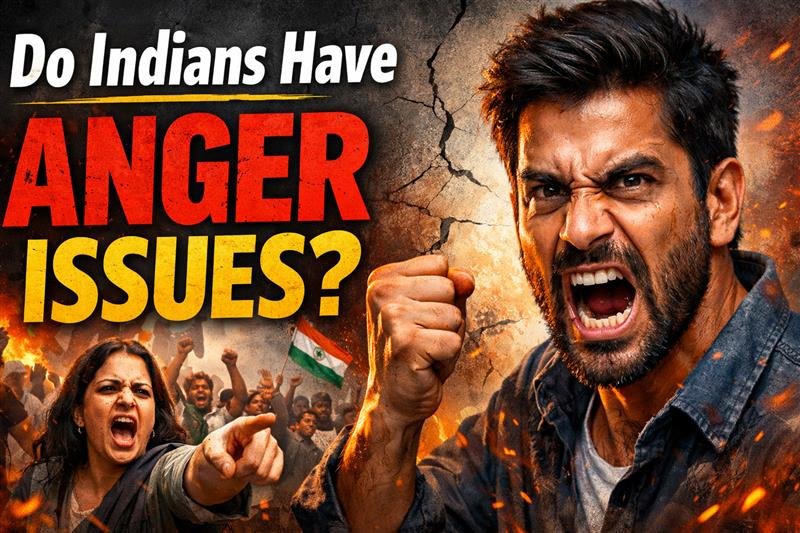
India, a nation celebrated for its diversity, resilience, and cultural depth, has undergone a remarkable transformation over the past century. From being a colonized land under British rule to emerging as one of the fastest-growing economies and a global IT hub, India’s journey is nothing short of extraordinary. However, alongside this progress, a pressing question arises: Do Indians have anger issues? Let’s explore this in detail.
From Servitude to a Rising IT Powerhouse
Historically, India endured centuries of foreign domination, culminating in British colonial rule. This period left deep scars like economic exploitation, social inequality, and a sense of collective helplessness. Post-independence in 1947, the nation embarked on a path of rebuilding, focusing on self-reliance and industrial growth.
Fast forward to the 1990s, liberalization opened doors to globalization. Today, India is recognized as a global IT hub, home to tech giants, startups, and millions of skilled professionals. This rapid evolution from servitude to technological leadership has instilled pride and ambition among Indians. But with ambition comes pressure—and pressure often breeds frustration.
The Drastic Change in Mood
The Indian psyche has shifted dramatically over the decades. Earlier generations valued patience, community living, and slow-paced lifestyles. Modern India, however, thrives on speed, competition, and constant connectivity. Urbanization, social media influence, and economic aspirations have created a culture of instant gratification.
This change has led to heightened stress levels. Traffic congestion, job insecurity, rising living costs, and societal expectations amplify daily frustrations. The result? A noticeable increase in anger-driven behaviors, from road rage to heated social media debates.
Why Are Indians Becoming More Angry?
Several factors contribute to this growing trend:
- Economic Pressure
While India’s economy is booming, income disparity remains stark. The race to achieve financial stability often leads to burnout and irritability. - Population Density & Urban Stress
Overcrowded cities, long commutes, and limited resources create an environment where patience wears thin. - Cultural Transition
Traditional values emphasizing tolerance clash with modern ideals of assertiveness and individualism, causing identity conflicts. - Digital Influence
Social media amplifies negativity. Online trolling, political polarization, and constant comparison fuel emotional volatility.
Is It Really an Anger Issue or a Coping Challenge?
Labeling this as an “anger issue” might oversimplify the problem. In reality, it reflects a coping challenge in a rapidly changing society. Indians are navigating a complex mix of old-world traditions and new-age ambitions. The inability to balance these pressures often manifests as anger.
The Way Forward
Addressing this requires a multi-pronged approach:
- Mental Health Awareness: Encourage counseling and stress management programs.
- Work-Life Balance: Promote flexible work environments and wellness initiatives.
- Cultural Education: Blend traditional values of patience with modern coping strategies.
- Digital Detox: Reduce dependency on social media to curb negativity.
Final Thoughts
India’s evolution from a colonized nation to a global IT powerhouse is inspiring. However, this transformation has brought emotional challenges that cannot be ignored. Recognizing and addressing anger-related behaviors is crucial for building a healthier, more balanced society.
